Across the United States, companies built whole cities to house the
people who worked for them — and owned the house, the store, the school and the
street. These are films about what happened next, made from the documents.
Copper, and the night seventy-three people died in a stairwell at a
Christmas party.
ON YOUTUBE
Next
In production
More towns
Eighteen films so far. There is a town like this in every state, and the
work is going through them one at a time.
SUBSCRIBE FOR THE NEXT
The method
Every figure is checked against the document that produced it.
These films are built almost entirely from public records — government surveys,
court opinions, newspaper pages, company archives — and each one is read rather
than cited. That sounds like a small distinction. It is not.
On the Nitro film, four of the claims that appear in nearly every published
account of the town turned out to be wrong, and one of them was wrong in a book
the film had already been taking its photographs from. Those corrections are
published alongside each film, with the page numbers.
Where the record is silent, the film says so. Where a
photograph is of the right town but the wrong company, it carries a caption
saying which. Where a source could not be reached, it is named as an open
question rather than smoothed over.
Nitro · West Virginia · 1917–2012
Twelve cents on the dollar.
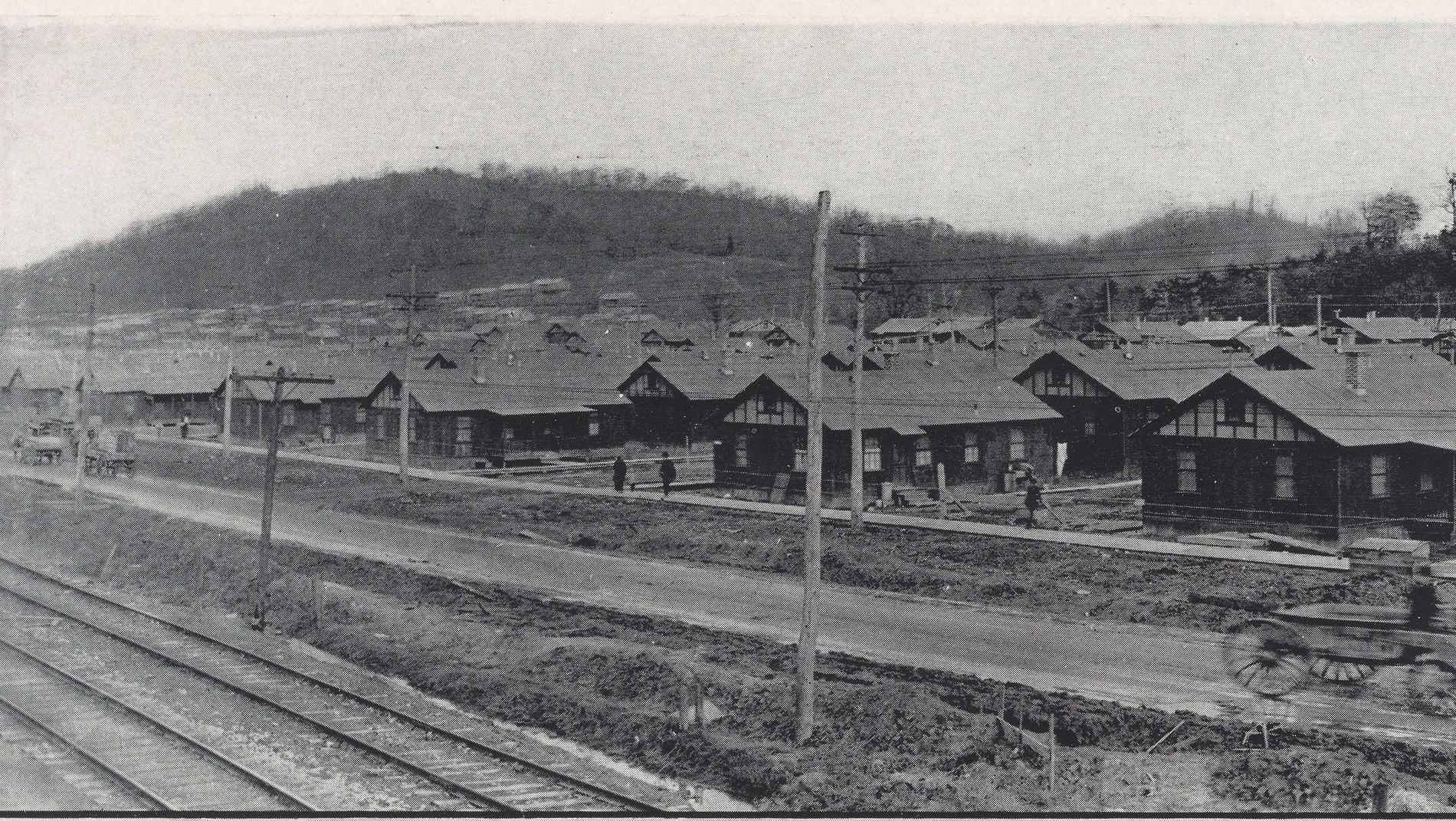
In December 1917 the United States government broke ground on a
cornfield sixteen miles west of Charleston. Eleven months later there was a city
on it. One year after that, the government sold the whole thing.
1,772
acres, laid out on farmland from nothing
737
manufacturing buildings
23,951
people, none of whom lived there the previous Christmas
$70,000,000
cost to the United States
$8,551,000
what it sold for, one year later
The film
The Government Built This City In 11 Months.
Coming soonThe film is finished. It goes up shortly.
The film is free and always
will be. What is for sale is everything behind it — the documents themselves, the
corrections with their page numbers, and the plates at full resolution.
The book
$9.99
Nitro, West Virginia
The full account, expanded from the film
Every archival plate, captioned and credited
The corrections, with citations
PDF and ePub
Book + the archive
$24.99
With the source pack
Everything in the book
The primary documents as scanned — Williams 1920,
the Crowell report, the 1919 sale notice, full pages
Every plate at full resolution, uncropped
The complete corrections file, and what could not be
verified, and why
What happened
A city built to make gunpowder, sold before it made any.
Congress approved money for three government explosives plants in October 1917.
DuPont chose the ground; then the Wilson administration took the job away from
DuPont, because it did not want the company any bigger. So rather than
let a company build a company town, the government built one.
Ground was broken two days before Christmas. At the peak, sixty prefabricated
bungalows went up in a day, and the houses had type numbers — Type 176 was a
five-room bungalow, and the government's own caption says who it was for:
skilled mechanics. Your job description was in the file with your address.
The plant was ninety per cent finished on the eleventh of November 1918 — the
day the war ended. Within a fortnight, roughly twelve thousand people had left.
In September 1919 the War Department advertised the town for sale, and in
November a syndicate of six Charleston businessmen and five New York investors
bought it in a single lot.
By 1929 the ground belonged to Monsanto. From 1948 it made 2,4,5-T there — the
half of Agent Orange that carried the dioxin. On the eighth of March 1949 an
autoclave in Building 41 ran away. In 2012, weeks before trial, Monsanto settled
with the town for up to ninety-three million dollars — more than eleven
times what the United States got for the entire city.
The two photographs
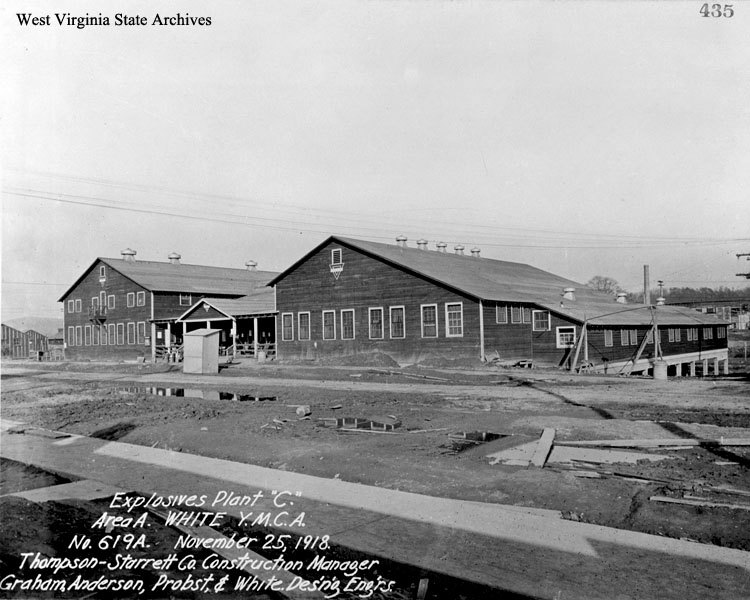
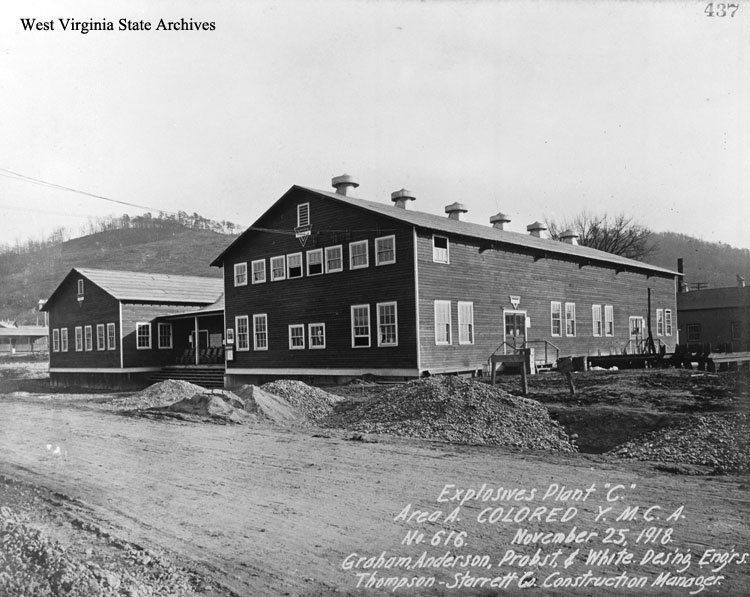
The captions are written on the negatives.
Not added by a cataloguer
later — written across the bottom of each plate in white ink, in the government
photographer's own hand. Negatives 616 and 619-A: three apart, the same November
afternoon, the same two firms named underneath.
Area A. WHITE Y.M.C.A. No. 619A. November 25, 1918.
West Virginia State ArchivesArea A. COLORED Y.M.C.A. No. 616. November 25, 1918.
West Virginia State Archives
Nobody wrote these captions to make a
point. They are two entries in a survey of a government facility, filed in order by
a man with a list and a pen — and they tell you the entire social architecture of
the town in the difference between two words.
Corrections
What the record actually says.
Left: what almost every
published account of Nitro says. Right: what the document says.
Nobody records how much powder Nitro made.
4,500,000 pounds, over "an operating period of
about a month" — against a design capacity of 15,625,000 pounds a month. That
is roughly seven days of its own capacity, for seventy
million dollars. About $15.56 a pound.
W. Bradford Williams, History of the Manufacture of
Explosives for the World War, 1920, p.31
The War Department's own victory report never mentions Nitro.
It names the town, gives its capacity as 625,000 lb a day,
names the builder and the operator, and prints a photograph captioned
Nitro, West Virginia. It also gives the output at the armistice as
109,000 lb a day — 17% of capacity — "with the expectation of
early and speedy increase."
A cumulative count on a job where the average man lasted forty
days. There were never more than 19,000 on site on any given
day. This was not a workforce; it was a current.
The plant's own daily records
The record names no women at the plant.
It records them — "about four hundred technically trained
men and women and six thousand laborers" — while the plan
printed inches earlier had asked for "five or six hundred technical men."
Not an absence. The record confirms women did technical work here and gives
not one of their names.
Williams, 1920, p.31
The government sold the town to the people living in it.
Residents did buy their houses — but from eleven
investors, not from the United States. The government sold the entire
plant-and-town as one lot to a syndicate, which then sold the houses on. The
comfortable version skips the syndicate. The syndicate is the story.
Charter, State of West Virginia, 3 November 1919
Daniel J. Jackling ran the explosives-plant programme.
Daniel Cowan Jackling. The West Virginia
Encyclopedia has the middle initial wrong; the War Department's own report
gives "D. C. Jackling". If a state encyclopaedia has the name of the man in
charge wrong, hold everything else loosely too.
Crowell, 1919, p.110
Nitro is named for nitroglycerine, and made high explosives.
Named from nitro-cellulose — the guncotton the
plant was built to make. And it made a propellant: smokeless
powder pushes the shell out of the gun. It is not the thing that detonates
when it arrives.
Contemporary plant records
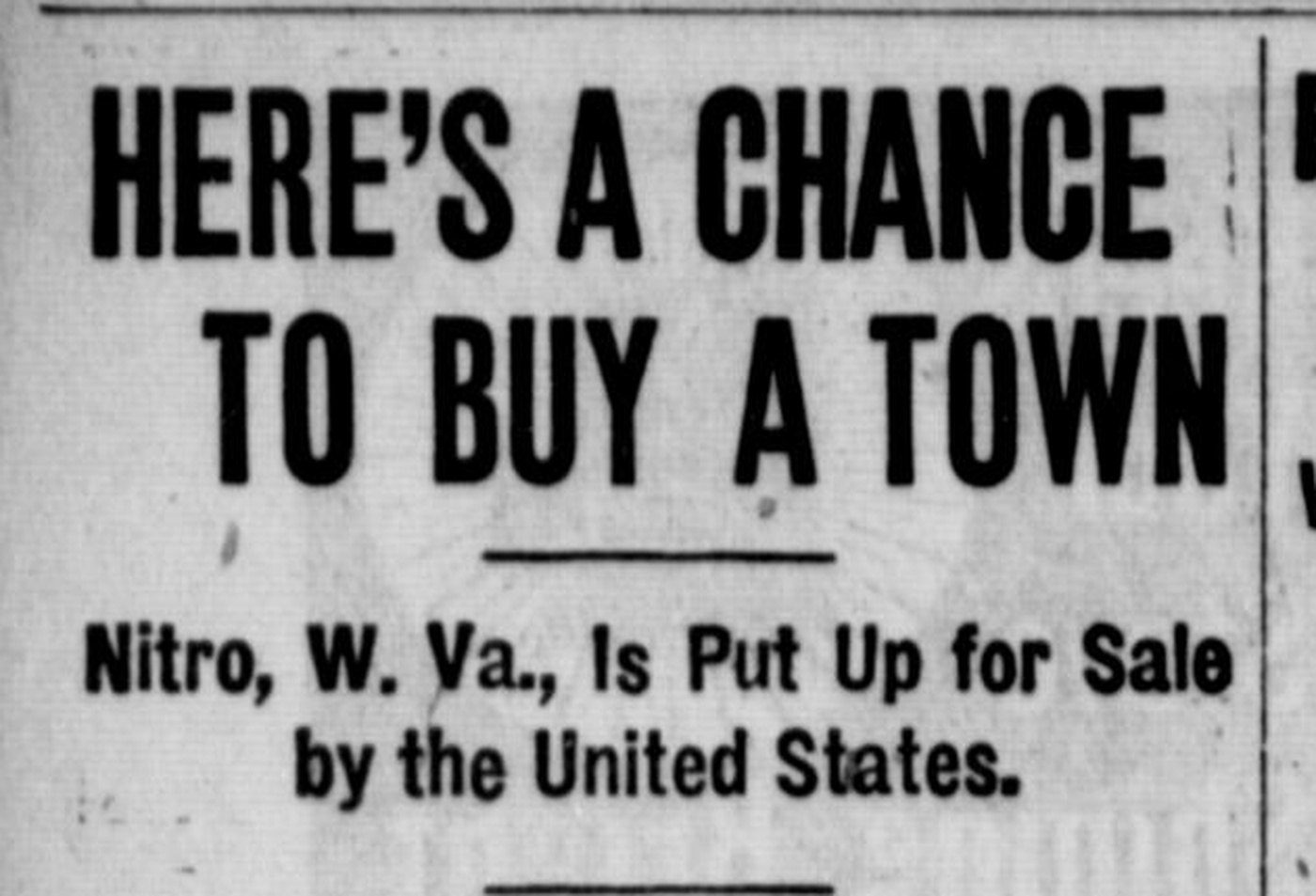
"HERE'S A CHANCE TO BUY A TOWN"
Charlevoix County Herald, East Jordan, Michigan, 19 September 1919 · Chronicling
America, Library of Congress
The sale
Five hundred miles away, a paper ran the listing.
Underneath the headline: "Nitro, W. Va., Is Put Up For Sale By The United
States. Cost Seventy Millions." Then the particulars, written like an
estate agent's — 737 manufacturing buildings, housing for twenty thousand
persons. There were twelve thousand of them still living in it.
The same page gives the hour. Bids would be opened at twelve noon on the
thirtieth of September 1919, and the paper is careful to say that it is not only
the plant being sold but "the civic community as well, to which the United
States also holds title."
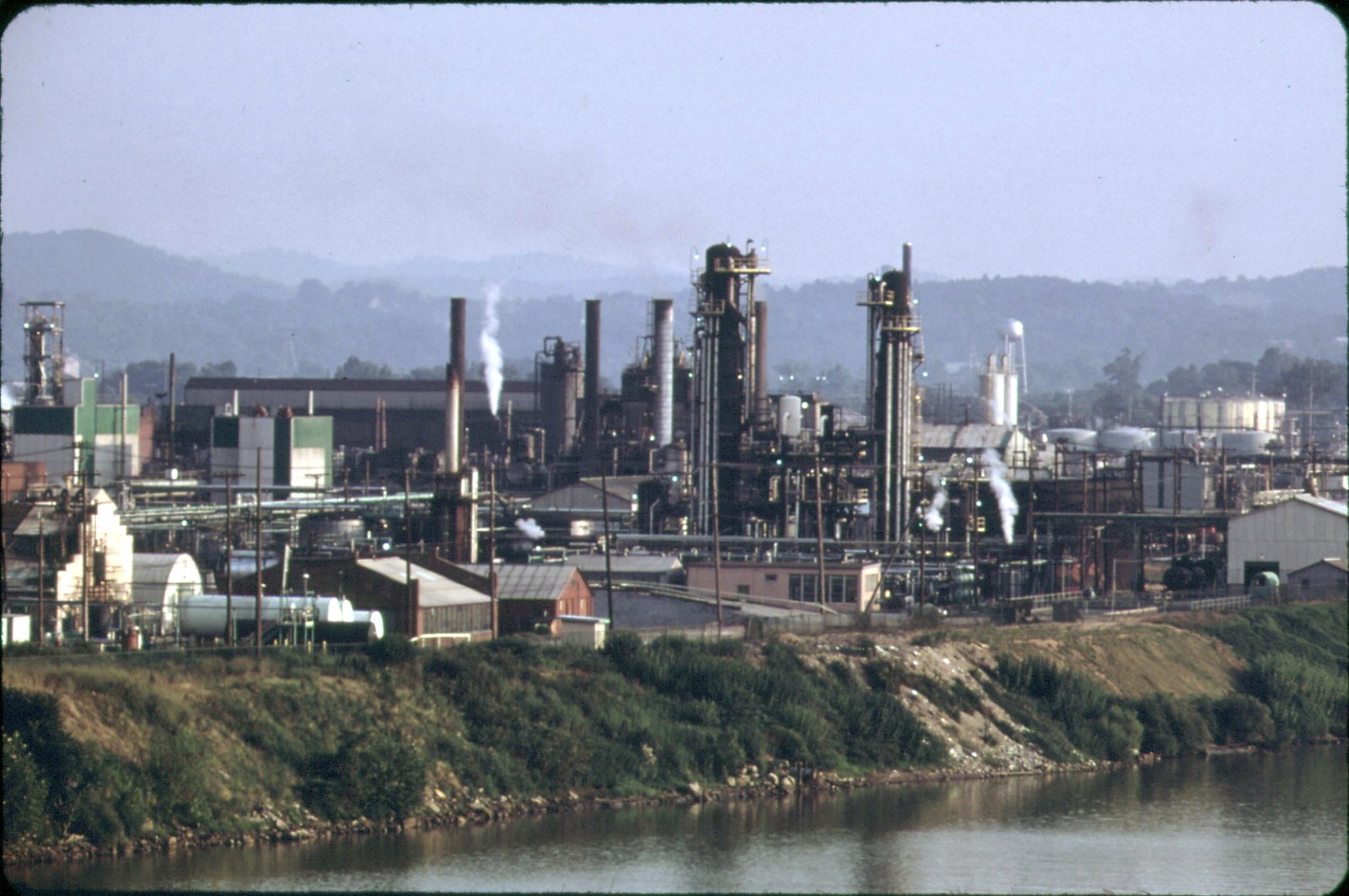
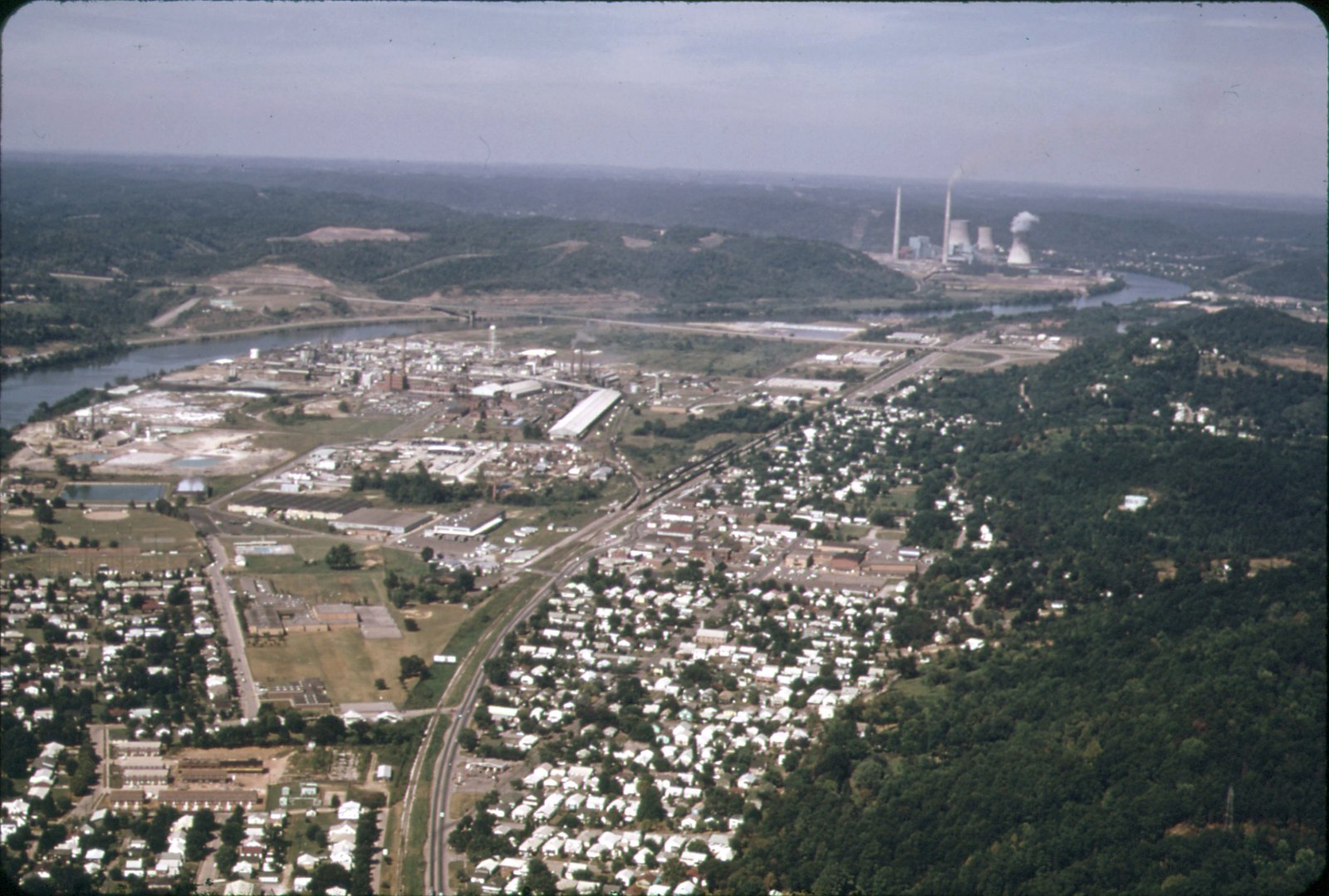
Nitro from the air, the town beside the plant, September
1973. Harry Schaefer · DOCUMERICA, U.S. Environmental Protection Agency ·
National Archives
The archive
Where all of it came from.
Science History Institute
West Virginia State Archives
WVU West Virginia & Regional History Center
Library of Congress · Chronicling America
DOCUMERICA · U.S. EPA, via the National Archives
UCSF Industry Documents Library
U.S. Environmental Protection Agency
Supreme Court of Appeals of West Virginia
U.S. District Court, S.D. West Virginia
U.S. Department of Labor, 1921
Every frame in the film names its repository on screen. Nothing in it
is generated, reconstructed or dramatised.
Sugar Land · Texas
The company town that won.
Every town in this series ended the same way: the company left and
the place died. Sugar Land did not. It is one of the wealthiest suburbs in Texas.
In February 2018 a man on a backhoe, digging the foundations of a new school,
hit a bone.
$136,217
median household income
10th
best place to live in America, U.S. News & World Report
95
people exhumed from the ground under the school — 94 men, one woman, aged roughly 14 to 70
1879–1909
the years they were buried there
3,500+
Texas prisoners who died between 1866 and 1912
The film
The Company Town That Won. Then They Dug the Foundations for a School.
Twelve chapters · 1080p · archival stills and primary documents ·
no image of any person in this film is generated Watch on YouTube →
The Sugar Land file
The research, published.
The film is free and always
will be. What is for sale is everything behind it — the documents themselves, the
corrections with their page numbers, and the plates at full resolution.
The book
$9.99
Sugar Land, Texas
The full account, expanded from the film
Every archival plate, captioned and credited
The corrections, with citations
PDF and ePub
Book + the archive
$24.99
With the source pack
Everything in the book
The primary documents as scanned — the Black Codes of 1866, the National
Register nomination, House Resolution 1324, full pages
The Lomax photographs at full resolution, uncropped
The complete corrections file, and what could not be
verified, and why
What happened
Slavery ended in 1865. In Fort Bend County, the sugar kept coming.
The land was granted in 1828 to Stephen F. Austin's secretary, and by 1843 there
was a mill on it pressing cane into raw sugar. It has been operating on that
property ever since — a federal historic nomination calls it the oldest
continuously operating business in Texas. In 1860 the two men who gave the place
its name held a hundred and eighty people as property.
Sugar is worse work than cotton. Cane has to be cut by hand, hauled, crushed and
boiled within a day or two of cutting or the juice spoils, in Gulf Coast heat,
around open fires. Sugar plantations had death rates that stood out even against
the rest of American slavery, and everyone involved understood that.
Then the Thirteenth Amendment abolished slavery — with one clause left open. In
1866 the Texas legislature passed three interlocking labour laws that walked
through it. By February 1867 the state was leasing prisoners to railroads. In
1878 two sugar planters, Edward Cunningham and Littleberry Ellis, leased
the entire prison population of Texas and put it in the cane.
A prison chaplain went to a newspaper in 1908; the legislature abolished convict
leasing in 1910 and the last contracts were cancelled at the end of 1912. But the
state had already bought the land — 5,235 acres in 1908 — and simply worked the
fields itself. The Central Unit at Sugar Land did not close until August
2011. The whip was legal in Texas prisons until 1941.
The clause
It was not hidden. It was not a drafting error.
Neither slavery nor involuntary servitude, except as a punishment for crime
whereof the party shall have been duly convicted, shall exist within the
United States, or any place subject to their jurisdiction.
Thirteenth Amendment to the Constitution of the United
States, ratified December 1865
A man could be arrested for being idle,
tried in a court he was barred from testifying in, fined an amount he could not
pay, and have his labour sold to cover the fine. None of it was slavery, legally
speaking, because a court had said the word guilty. Black Texans were
about a quarter of the state's population and somewhere between half and sixty per
cent of its prisoners. A man assigned to a contract work farm could expect to live
seven years.
1934
The year somebody came to listen.
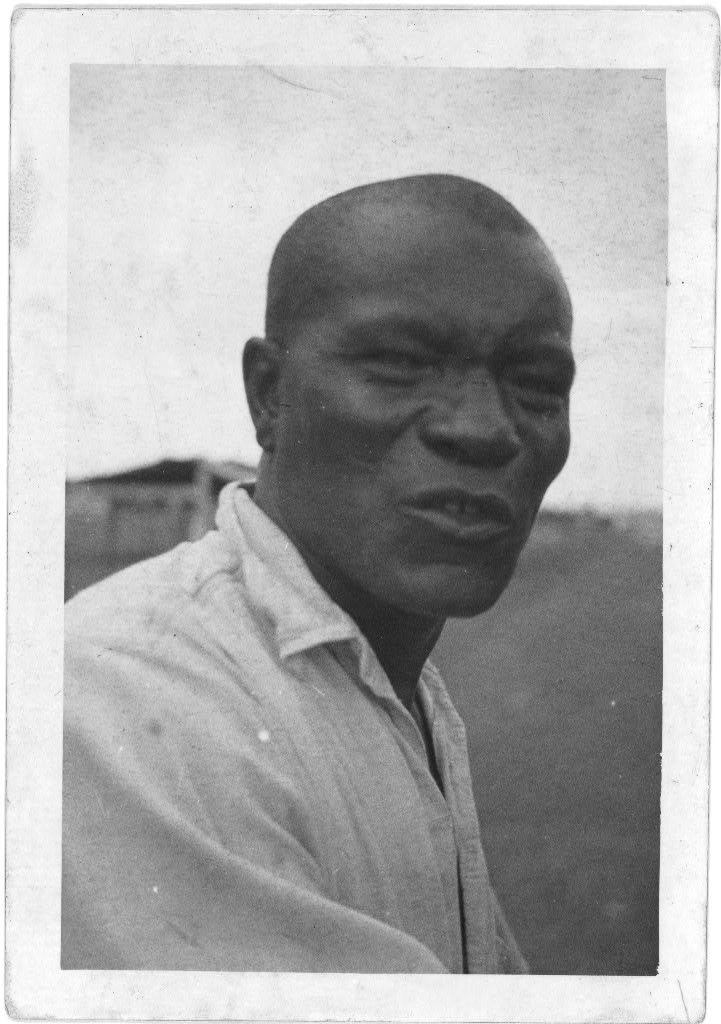
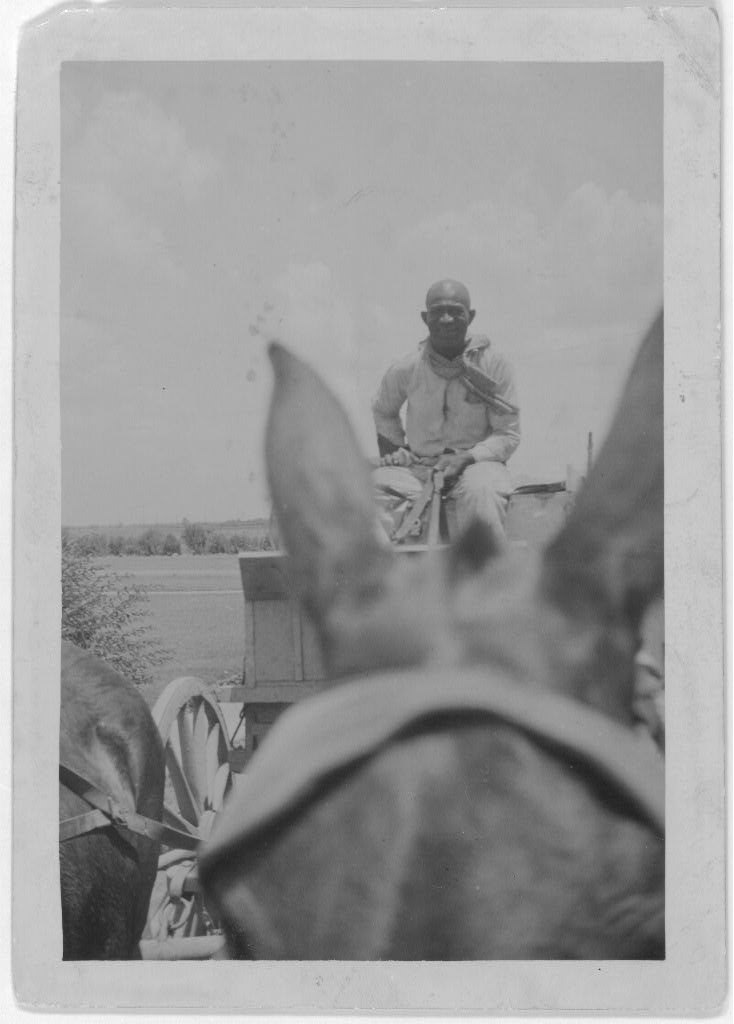
John A. Lomax went into the
Texas prison farms with a recording machine for the Library of Congress. These two
men were photographed at Sugar Land — one sat for the camera, the other did not
stop working for it — and they are named in the Library's own catalogue, which is
more than the records managed for most of the people who worked that ground.
James Baker, known as Iron Head. Sugar Land, 1934.
John A. Lomax Collection · Library of CongressMoses Platt, known as Clear Rock — photographed behind
a plough mule, in the field. Sugar Land, 1934.
John A. Lomax Collection · Library of Congress
Four men
Named in the camp's own records.
The 2020 bioarchaeological
report compiled an archival roster of about seventy men who worked and died at the
camp between 1879 and 1909. No name has been matched to any set of remains.
Nathan Pope
Eighteen. Convicted of burglary. Died in 1879, two days after arriving at the Freeman Camp, during an escape attempt.
Robert Brown
Given twenty-five lashes for laziness, twenty-five for disobedience and twenty-five for impudence to a guard. Died of heat stroke.
William Crawford
Twenty-one, married, accused of forgery. Gunned down trying to escape.
Ed Jackson
Twenty. Accused of stealing a horse. Died of malaria.
Fort Bend ISD, Back to Bondage, 31 August 2020 · site 41FB355
Corrections
What the record actually says.
Left: what is commonly
written about Sugar Land. Right: what the document says.
Convict leasing was slavery under another name.
It was a separate legal system, built in the
gap the Thirteenth Amendment left open. Collapsing the two loses the argument
entirely — the point is not that the law was ignored. The point is that the
law worked exactly as written.
Thirteenth Amendment; Texas Black Codes, Eleventh
Legislature, 1866
Texas abolished convict labour in 1910.
Texas abolished convict leasing. The same Act
required prisoners to work on farms owned by the state — so the
state bought the plantations. By 1921 it held more than 81,000 acres, over
50,000 of them bought from the men who had been leasing convicts.
Texas State Library and Archives Commission; TSHA
The state bought the prison farm land from Cunningham, the convict lessee.
It did not. Cunningham defaulted and sold to Kempner and
Eldridge. The state bought 5,235 acres from the Imperial Sugar
Company in 1908. The Imperial State Prison Farm opened in April
1909.
THC marker; Rice University Digital Collections; Texas
Tribune
Lead Belly was a leased convict at Sugar Land.
Leasing had ended before he got there. Huddie Ledbetter was
state prison-farm labour, transferred to the Imperial State
Farm and pardoned in 1925 — which is the whole point. The thing that was
abolished had been replaced.
Library of Congress; TSHA
"Midnight Special" was written at Sugar Land, about Sugar Land.
That reading is John Lomax's interpretation.
The song predates Lead Belly — Howard Odum printed lyrics in 1905 and Carl
Sandburg published full versions in 1927, and early versions place it
elsewhere.
Odum, 1905; Sandburg, The American Songbag, 1927
Imperial Sugar paid its workers in company scrip.
No source documents scrip at Sugar Land. It was
payroll deduction at company-controlled stores and banks —
which does the same work and is what the record actually shows.
City of Sugar Land; NRHP nomination
Segregation at Sugar Land is an inference.
It is in a federal document. The National Register nomination
records that "minorities lived in a separate area of town and had their
own school" and "did not receive the same housing assistance."
The neighbourhood was Mayfield Park, and around 1920 the convict-lease
Prisoner's Quarters physically framed it.
NRHP nomination, National Park Service; Roberts, 2020
One man
Reginald Moore.
He was a Texas correctional officer between 1985 and 1988, at a prison farm a
few miles from this ground, and that is where the research started. He spent
roughly two decades warning Fort Bend ISD and anyone else who
would listen that there were unmarked convict graves on that land. He was the
volunteer caretaker of the cemetery next door and he got it a state marker in
2016.
When the bones came up, he was kept away from the excavation.
They won't even let me see it, and that hurts me so bad. All that work I've
done, and they ran me off.
Reginald Moore, 1959–2020 · Texas House Resolution 1324,
87th Legislature
He died on 3 July 2020, aged sixty — six weeks before the report was
released.
Where it stands
Still not identified. Still not built.
The ninety-five were reburied in November 2019 where they were found, each grave
individually marked so that identification remains possible. Permanent markers
went in in September 2020, the site became a Historic Texas Cemetery in February
2021, and the state's marker was dedicated on 19 June 2025 —
Juneteenth.
No individual has been identified by name. A handful of
families have been linked by DNA. In 2023 a public broadcaster reported that
nobody was funding the identification work and a genealogist was paying for it
out of pocket. The memorial was designed by MASS Design Group and costed at four
to four and a half million dollars; Fort Bend County approved one and a half
million of it in December 2025. It has not been built.
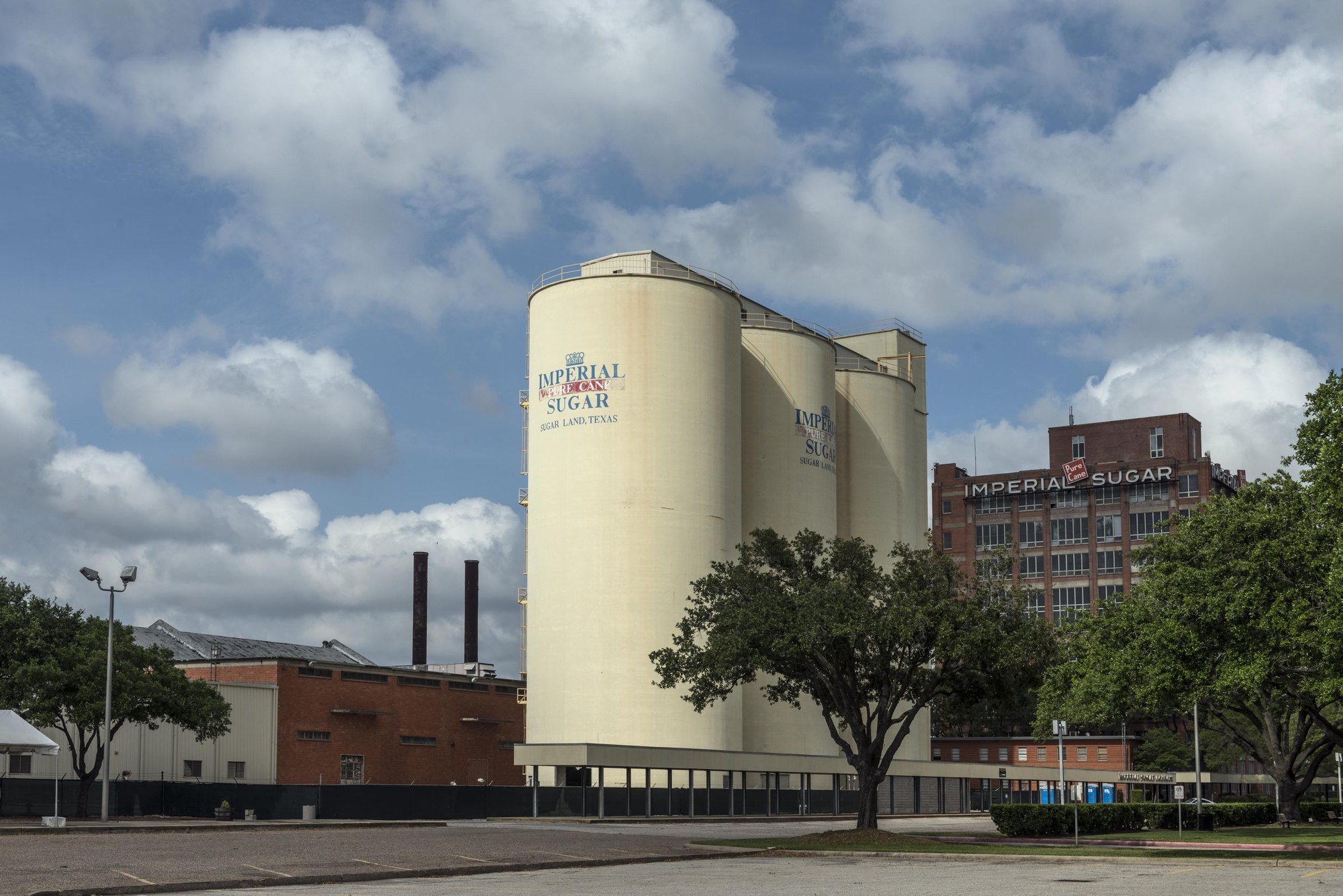
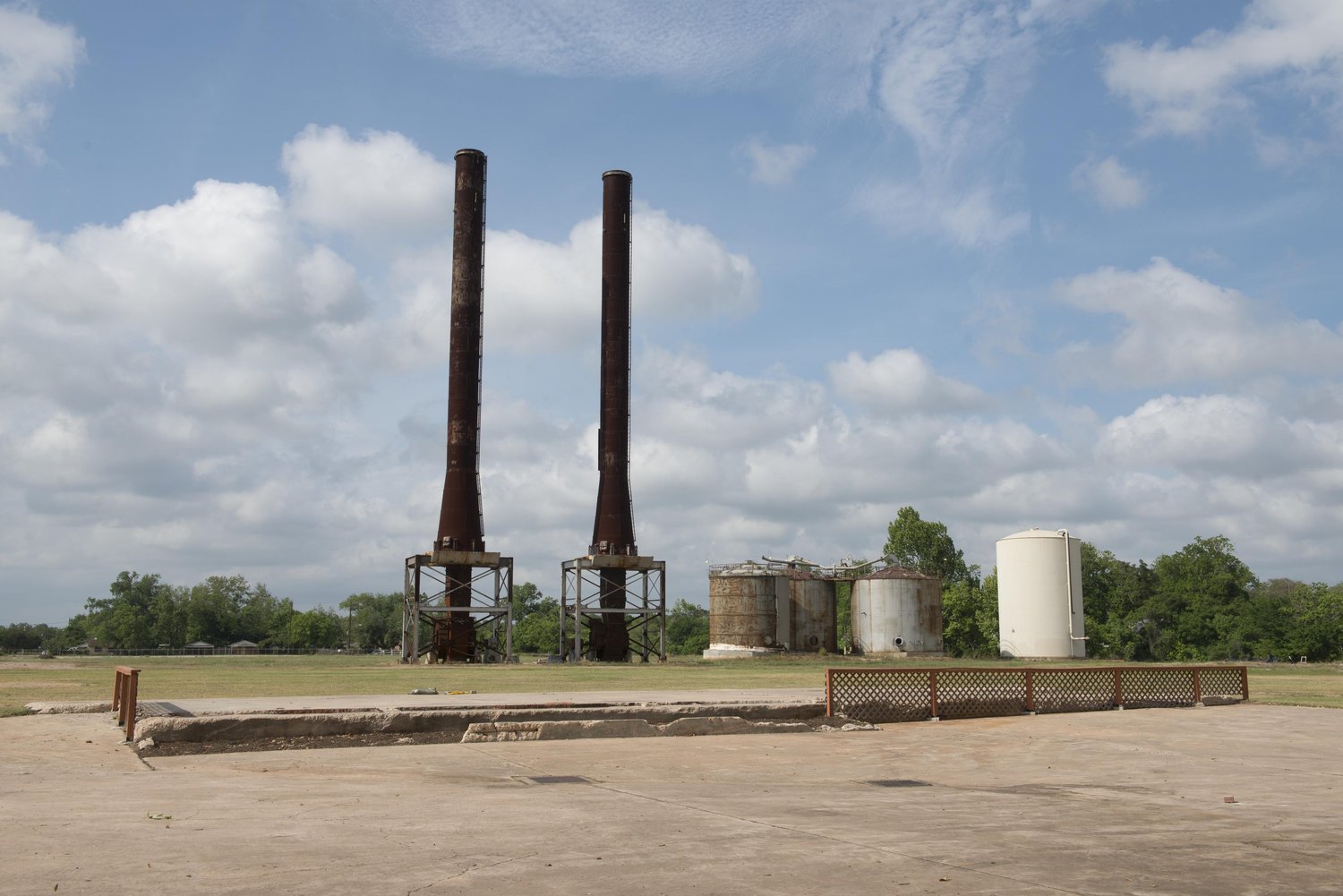
What is left of the refinery. The city bought the site
in June 2025 — the first time it has ever owned it.
Carol M. Highsmith · Library of Congress
Six words
Checked term by term.
The City of Sugar Land's official City History page runs from Austin's
land grants through Oakland Plantation, the 1907 sale to Kempner and Eldridge,
the railroad and incorporation in 1959. It does not contain the words
slave, slavery, enslaved, convict, prison or
penitentiary — not once. The city's July 2025 staff report on
the Imperial Historic District, twenty years of redevelopment history for the
refinery site, does not mention convict leasing at all.
That is an absence on a specific page and in a specific document, checked on a
specific date, and it is worth being precise about what it means. The city runs a
Convict Lease Memorial page, joined a task force in 2018 and restored the old
prison-farm cemetery. The acknowledgment came from the school district,
the state historical commission, and one man with a day job — not from the city's
story about itself.
The archive
Where all of it came from.
Texas State Historical Association · Handbook of Texas
Texas State Library and Archives Commission
Texas Historical Commission
Texas Legislative Reference Library
National Register of Historic Places · National Park Service
Library of Congress · John A. Lomax Collection
Fort Bend ISD · Back to Bondage, 2020
Texas House Resolution 1324, 87th Legislature
U.S. Census Bureau
Rice University Digital Collections
City of Sugar Land
Walker, Penology for Profit, 1988
Every frame in the film names its repository on screen. Some
illustrative plates are generated and are drawn in a non-photographic style so they
cannot be mistaken for archival material. No image of any person in the film is
generated.
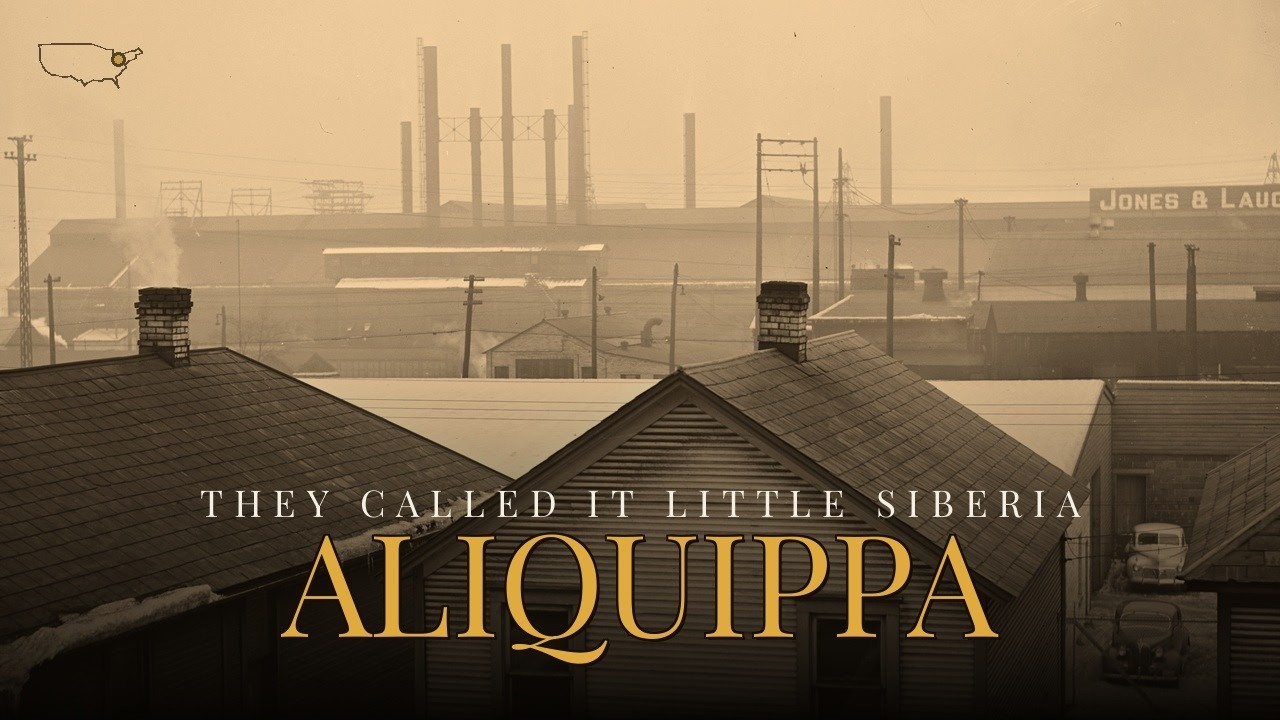
Aliquippa · Pennsylvania
Drawn before anyone arrived.
Jones & Laughlin Steel cut twelve numbered neighbourhoods into the
hillsides above the Ohio between 1907 and 1912 — for a workforce it had not yet
hired, in a town that did not yet exist. It owned the water company, the land company
and the street railway. Pennsylvania sold companies police commissions for a dollar
each, and the town acquired a nickname.
12 Plans
numbered, not named. Plan One begun 1907, Plan Twelve finished 1912 — and settled nationality by nationality
7 miles
the Works along the south bank of the Ohio, about 1,400 acres. Raw ore in at one end, finished product out at the other
$1
the price of a Coal and Iron Police commission after 1871. 7,632 were issued before Gifford Pinchot abolished the force in 1931
5–4
12 April 1937. Ten men had been fired; the Court upheld the Wagner Act and rewrote the rights of every working person in the country
27,116 → 9,238
the population, 1930 to 2020. In 1984 LTV closed most of the Works and about 8,000 lost their jobs in a stroke
The film
The American Town So Controlled They Called It Little Siberia.
Twelve chapters · 31 minutes · 1080p · archival stills and
primary documents · photographed by Jack Delano, John Vachon and Arthur Rothstein Watch on YouTube →
The Aliquippa file
The research, published.
The film is free and always
will be. What is for sale is everything behind it — the documents themselves, the
corrections with their page numbers, and the plates at full resolution.
The book
$9.99
Aliquippa, Pennsylvania
The full account, expanded from the film
Every archival plate, captioned and credited
The corrections, with citations
PDF and ePub
Book + the archive
$24.99
With the source pack
Everything in the book
The primary documents as scanned — NLRB v. Jones & Laughlin Steel
Corp., 301 U.S. 1 (1937), the J&L Aliquippa Works records at the
University of Pittsburgh, and the census returns from 1930
Every plate at full resolution, uncropped
The complete corrections file, and what could not be verified, and why
What happened
A mill did not grow into a town. A mill drew one.
The site was chosen for three reasons and none of them were about people. It had
seven miles of flat riverbank — the longest continuous stretch of buildable land
on that section of the Ohio. It had the river, which meant barges, which meant coal
and ore and limestone arriving by water at a fraction of the cost of rail. And it was
eighteen miles from Pittsburgh: close enough to the money, far
enough from the city that a company could do as it liked.
Jones & Laughlin began building the works between 1905 and 1910,
and while the furnaces were going up it was laying out the town. The hillsides were
divided into twelve sections and given numbers rather than names. Construction
started in Plan One in 1907; by 1912 Plan Twelve was finished. The company built
twelve neighbourhoods for a workforce it had not yet hired, and then settled them
nationality by nationality — so that a Serbian crane operator and an Italian
labourer might work forty feet apart for ten hours and go home to different worlds,
with no common tongue but the handful of English words the job required.
An 1865 statute let Pennsylvania commission private police for private companies.
After 1871 a commission cost one dollar. For a dollar a steel company
could put a man on the street with the authority of the state and the loyalty of an
employee. J&L owned the water company, the land company and the street railway by
1912; it built the schools and the churches; and on election day its agents counted
the votes. 7,632 commissions were issued across the Commonwealth
before Governor Gifford Pinchot abolished the force in 1931.
Ten men were fired for union activity. Their union was the Amalgamated Association's
Beaver Valley Lodge No. 200, and the company's argument was that
manufacturing in Pennsylvania was none of the federal government's business. About
75 per cent of what the Works produced was shipped out of the state
— and that was the fact the case turned on. On 12 April 1937
the Supreme Court upheld the Wagner Act, five to four, Chief Justice Hughes writing.
Then came the best years: employment as high as fourteen thousand, a town of
twenty-seven thousand above it, and a contract. In 1968 LTV acquired J&L. In 1984
it closed most of the Works and about eight thousand people lost
their jobs at once. There had never been a second employer. Demolition ran through
1988, and the men who had built the place stood on the hillsides and watched it come
down.
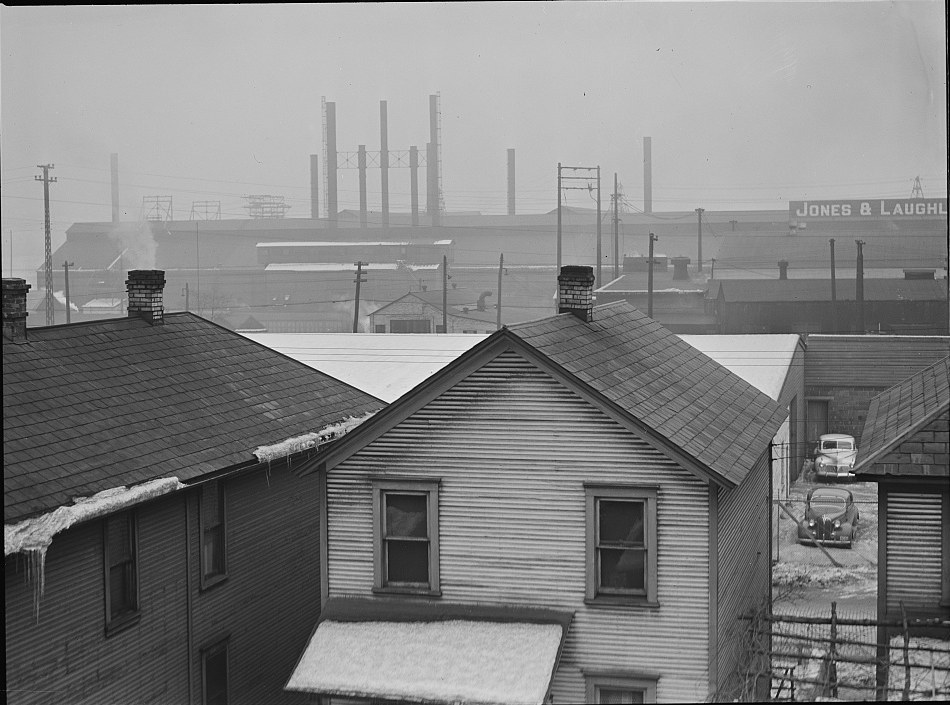
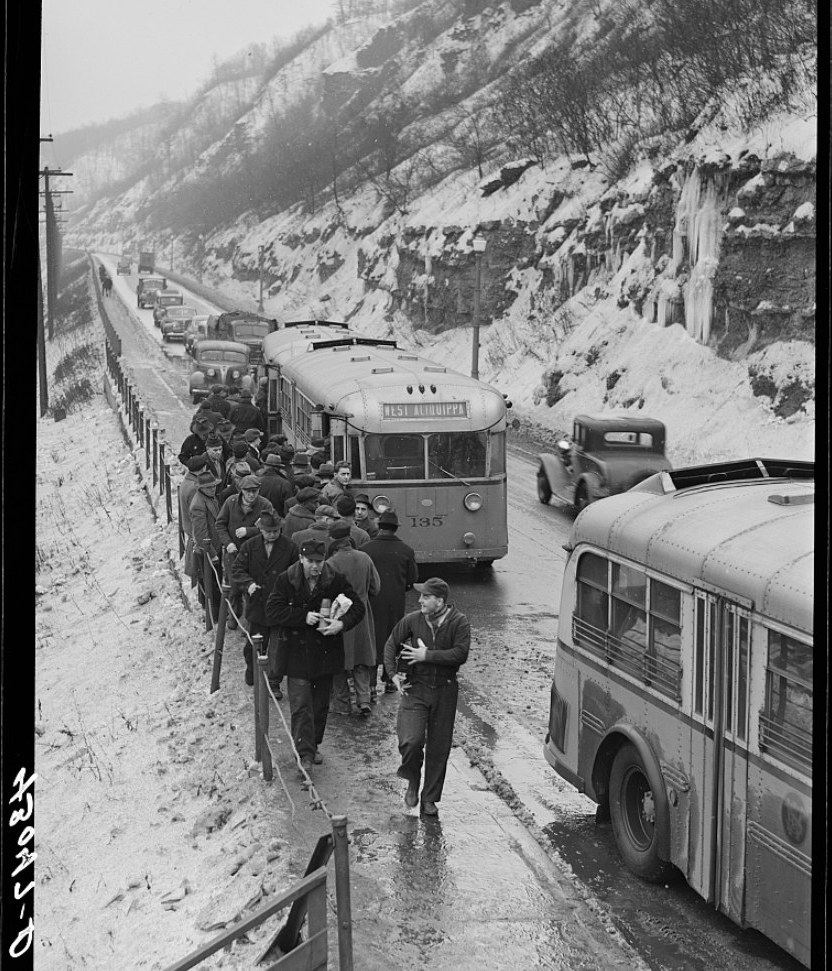
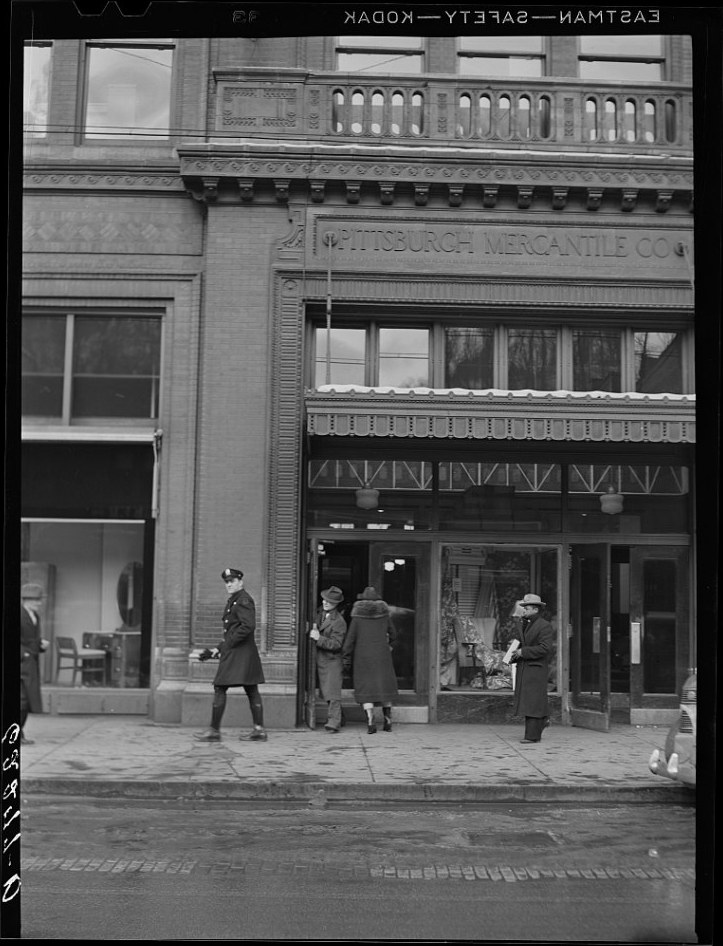
Changing shifts at the Aliquippa Works. The car is marked WEST ALIQUIPPA — the Plans ran down to the mill and the mill ran three shifts, so the road filled four times a day. Jack Delano · Farm Security Administration / Office of War Information · Library of Congress · LC 2017793412. No known restrictions on publication.The Pittsburgh Mercantile Company — the J&L company store. The company owned the water, the land, the street railway and the shop. John Vachon · Farm Security Administration / Office of War Information · Library of Congress · LC 2017811756. No known restrictions on publication.
Ten men
Two motor inspectors, a tractor driver, three crane operators.
The Supreme Court's own recitation lists what the ten discharged employees did for
a living: two motor inspectors, one tractor driver, three crane operators,
one man who washed coal in the coke plant, and three labourers. Ten thousand
men worked in that plant and a community of about thirty thousand lived above it.
The Court's decision reshaped American labour law for everyone who has worked for
wages since.
It does not name them. Only their jobs are recorded.
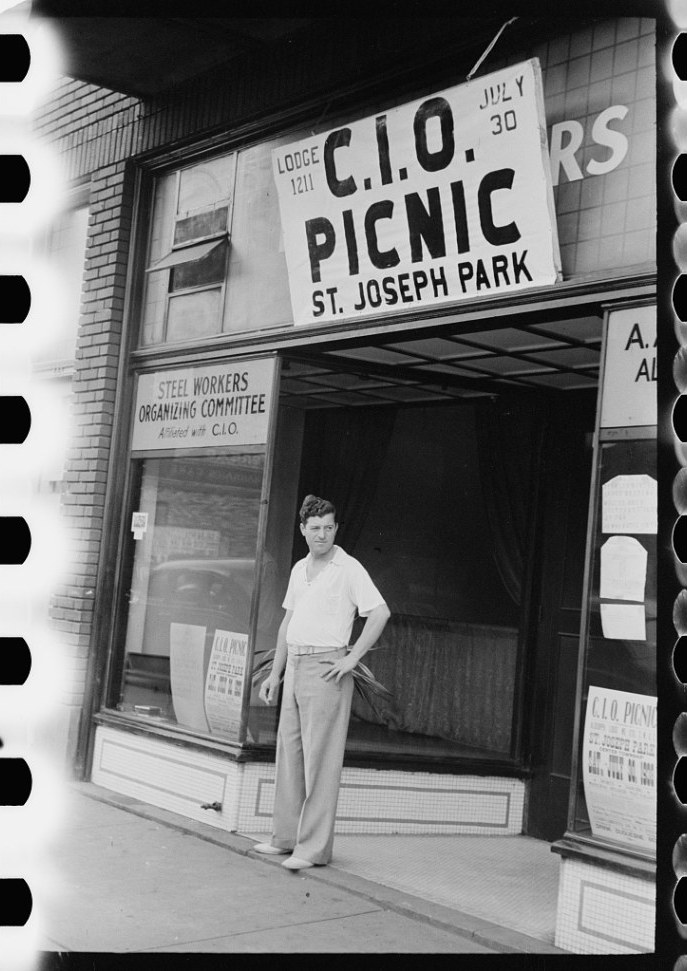
The union headquarters at Aliquippa, photographed in July 1938 — one year and three months after the decision. This is the union's Aliquippa, photographed at the moment it won. Arthur Rothstein · Farm Security Administration / Office of War Information · Library of Congress · LC 2017723757. No known restrictions on publication.
Corrections
What the record actually says.
Left: what is commonly
written about Aliquippa. Right: what the document says — or does not.
SWOC organised the Aliquippa men.
The Supreme Court's record names the Amalgamated Association of
Iron, Steel and Tin Workers, Beaver Valley Lodge No. 200. SWOC
was formed in 1936 and was central to the wider 1937 steel campaign, but the
charge in this case came from the Amalgamated lodge. The film uses the Court's
record.
NLRB v. Jones & Laughlin Steel Corp., 301 U.S. 1 (1937)
Pennsylvania's First Lady coined “Little Siberia”.
The nickname is well attested and the film uses
it. The attribution is single-sourced to one county historical
page, so the film does not make it. If a second independent source turns up, the
line goes back in.
County historical record — uncorroborated
Quinto Mancini worked at Jones & Laughlin.
Henry Mancini's father is documented as a steelworker in
West Aliquippa, which sits beside the Works — but no source states
his employer. The film says he worked in steel and lets the geography imply the
rest. It is not upgraded to J&L.
Documented; employer unrecorded
It was the largest steel mill in the world.
It was described as such at its height, and
nobody who saw seven miles of it argued with the claim. Whether it was ever
precisely true is not established, so the film reports the description rather
than asserting the fact.
Contemporary description
The document itself has never surfaced
Nobody has found the names of the ten men.
The reported opinion gives their occupations and not their names. If they are
written down anywhere, the likeliest places are the Detre Library &
Archives at the Heinz History Center, the records of USW Local
1211, and the NLRB's own case file. None of the three has
been searched to the bottom.
If you have seen those names — in a lodge roll, a pay ledger, a newspaper
page, a family paper — we want the citation, and we will publish it with your
name on it if you want it there. Ten men lost their jobs and the country's labour law
changed. It is a poor sort of record that keeps the ruling and loses the men.
The count
Twenty-seven thousand, then nine.
1930
27,116
1940
27,023
1967
about 26,800
2000
11,734
2020
9,238
US Census, 1930–2020. In 1987 the Commonwealth declared Aliquippa a
financially distressed municipality under Act 47; it received its city charter the same
year. By 1990 thirty per cent of the population was on unemployment. By 1997 around six
hundred people were still working in steel here, out of fourteen thousand at the peak.
The archive
Where all of it came from.
NLRB v. Jones & Laughlin Steel Corp., 301 U.S. 1 (1937)
Library of Congress · FSA/OWI · Jack Delano, January 1941
Library of Congress · FSA/OWI · John Vachon, January 1941
Library of Congress · FSA/OWI · Arthur Rothstein, July 1938
Library of Congress · Harris & Ewing Collection, 1937
University of Pittsburgh · J&L Aliquippa Works Records, 1943–1976
Hagley Digital Archives · Aliquippa Works
Beaver County historical record
U.S. Census, 1930–2020
This town was photographed by three of the most significant
documentary photographers of the twentieth century, all sent here by the same
federal programme: Jack Delano and John Vachon in January 1941, Arthur Rothstein in
July 1938. Every archival frame on this page is Library of Congress, no known
restrictions on publication, and names its repository in the caption. Connective and
atmospheric imagery in the film is illustrated and labelled as such on screen; no
generated image is used for the mill, the company store, any Plan house, any named
person, the 1937 case or the 1984 closure — each of those has a real photograph.
The attribution of the “Little Siberia” nickname to Pennsylvania's First
Lady is not used: it rests on a single county historical page and no
second source has been found.
The shop
The films are free. The research is the product.
Every film is built from primary documents — census returns, federal
reports, court filings, newspaper pages, the photographers' own captions. Almost
none of it is online in one place, and the parts that are, are scattered across a
dozen catalogues under numbers nobody outside an archive would guess.
So each town gets a book: the full account,
expanded past what the runtime allowed, with every plate captioned and credited and
every correction carrying the page it came from. And behind the book, the documents
themselves.
Nitro · West Virginia
Twelve cents on the dollar.
The book
$9.99
Nitro, West Virginia
The full account, expanded from the film
Every archival plate, captioned and credited
The corrections, with citations
PDF and ePub
Book + the archive
$24.99
With the source pack
Everything in the book
The primary documents as scanned — Williams 1920, the Crowell report,
the 1919 sale notice, full pages
Every plate at full resolution, uncropped
The complete corrections file, and what could not be verified, and why
Sugar Land · Texas
The company town that won.
The book
$9.99
Sugar Land, Texas
The full account, expanded from the film
Every archival plate, captioned and credited
The corrections, with citations
PDF and ePub
Book + the archive
$24.99
With the source pack
Everything in the book
The primary documents as scanned — the Black Codes of 1866, the National
Register nomination, House Resolution 1324, full pages
The Lomax photographs at full resolution, uncropped
The complete corrections file, and what could not be verified, and why
Kellogg · Idaho
They did the math.
The book
$9.99
Kellogg, Idaho
The full account, expanded from the film
Every archival plate, captioned and credited
The corrections, with citations
PDF and ePub
Book + the archive
$24.99
With the source pack
Everything in the book
The primary documents as scanned — the HAER survey of the smelter, the
Superfund record, the 1996 demolition reporting
Every plate at full resolution, uncropped
The complete corrections file, and what could not be verified, and why
Aliquippa · Pennsylvania
Drawn before anyone arrived.
The book
$9.99
Aliquippa, Pennsylvania
The full account, expanded from the film
Every archival plate, captioned and credited
The corrections, with citations
PDF and ePub
Book + the archive
$24.99
With the source pack
Everything in the book
The primary documents as scanned — NLRB v. Jones & Laughlin Steel
Corp., 301 U.S. 1 (1937), the J&L Aliquippa Works records at the
University of Pittsburgh, and the census returns from 1930
Every plate at full resolution, uncropped
The complete corrections file, and what could not be verified, and why
Every town
gets a book — the back catalogue is being written one town at a time
PDF · ePub
read on anything; no app, no account, no expiry
Cited
every figure carries the document and the page it came from
Kellogg · Idaho
They did the math.
On 3 September 1973 the building that filtered the emissions from
the Bunker Hill lead smelter burned down. The company did not rebuild it. It kept
the smelter running, increased production, and vented straight over the town for
eleven months.
715 ft
the tallest chimney. On a still morning the plume was visible thirty miles off
35 tons
of lead a month vented unfiltered — four times the pre-fire rate
$6–7m
the liability a Gulf Resources vice president estimated for poisoning about 500 children — against $25.9m the lead operation earned that year
173 of 175
children within a mile of the smelter at or above 40 µg/dL of blood lead
1,500 sq mi
the largest contiguous Superfund site in the United States
The film
The Company That Calculated What 500 Poisoned Children Would Cost.
Twelve chapters · 1080p · archival stills and primary documents ·
no image of any child in this film is generated Watch on YouTube →
The Kellogg file
The research, published.
The film is free and always
will be. What is for sale is everything behind it — the documents themselves, the
corrections with their page numbers, and the plates at full resolution.
The book
$9.99
Kellogg, Idaho
The full account, expanded from the film
Every archival plate, captioned and credited
The corrections, with citations
PDF and ePub
Book + the archive
$24.99
With the source pack
Everything in the book
The primary documents as scanned — the HAER survey of the smelter, the
Superfund record, the 1996 demolition reporting
Every plate at full resolution, uncropped
The complete corrections file, and what could not be verified, and why
What happened
The town did not call the company the company. It called it Uncle Bunker.
A claim was filed on the galena outcrop on 10 September 1885 by
Phillip O'Rourke, with Noah Kellogg as a witness. Simeon Reed bought the mine in
1887 and incorporated the Bunker Hill and Sullivan Mining and Concentrating
Company. By 1948 the operation was running a mill through three thousand
tons of rock a day, a smelter making close to ten thousand tons of lead
a month, and a zinc plant on top of that.
It was violent from early on. On 29 April 1899 miners seized a
Northern Pacific train at Burke, ran it down the valley to Wardner and dynamited
the company concentrator — a quarter of a million dollars of plant. Governor Frank
Steunenberg declared martial law; Idaho's National Guard was in the Philippines,
so he asked President McKinley for federal troops. Hundreds of men were held in
what the valley called the bullpen, and afterwards a man had to
renounce his union membership to get a permit to work.
Steunenberg was killed on 30 December 1905 by a bomb rigged to
the side gate of his house in Caldwell. Harry Orchard — a former union man who
had also been a paid informant for the mining companies — confessed and said the
union's leaders had hired him. At the 1907 Boise trial, Clarence
Darrow defended and William Borah prosecuted; Orchard
was cross-examined for twenty-six hours over a week. Bill Haywood and George
Pettibone were acquitted. The charges against Charles Moyer were dropped.
Then the good years — and then the baghouse fire. Gulf Resources and
Chemical Corporation had bought the operation in 1968; Kellogg was a
line in a portfolio. The smelter closed in 1981 and by 1982 it was over. Gulf sold
the operation and then filed for bankruptcy in the United States, escaping the
cleanup costs and leaving the workforce without pensions and without
medical benefits.
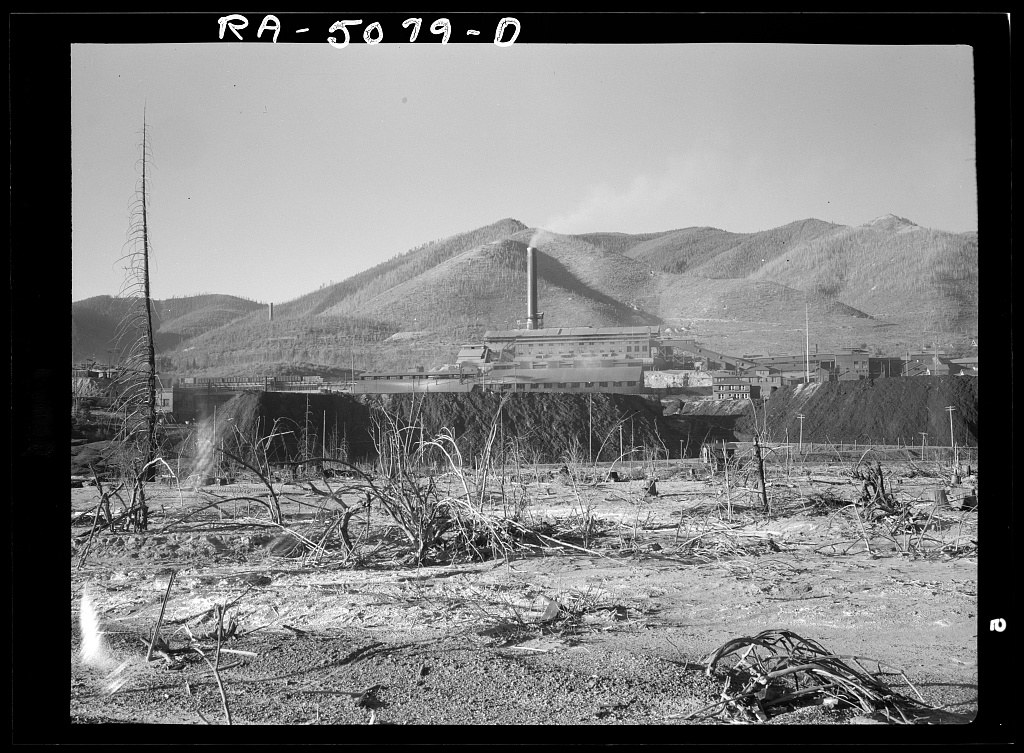
“Largest lead mine in the world surrounded by destroyed trees. Kellogg, Idaho.” July 1936 — thirty-seven years before the bag house burned. The caption is the Farm Security Administration’s own. Arthur Rothstein · Farm Security Administration · Library of Congress · LC 2017760942. Frame RA-5079-D. Presented flipped: the Library’s scan is of the negative’s emulsion side, so the original file shows the valley reversed.
The arithmetic
Somebody sat down and worked out what it would cost.
At some point during those eleven months a vice president of Gulf Resources
estimated what it would cost the company in liability if it carried on exposing
the children of Kellogg to lead. He put it at six to seven million
dollars, for roughly five hundred children — and set that against
approximately $25.9 million the lead business was earning that
year.
When the children were finally tested, 173 of the 175 living
within a mile of the smelter had blood lead at or above 40 micrograms per
decilitre. The average was 67.4. A one-year-old tested at
164 — the highest level ever recorded in a child. Over the same
period the smelter also released more than two tons of arsenic and two and a half
tons of mercury.
There is no editorial to add to that. The figures are the argument.
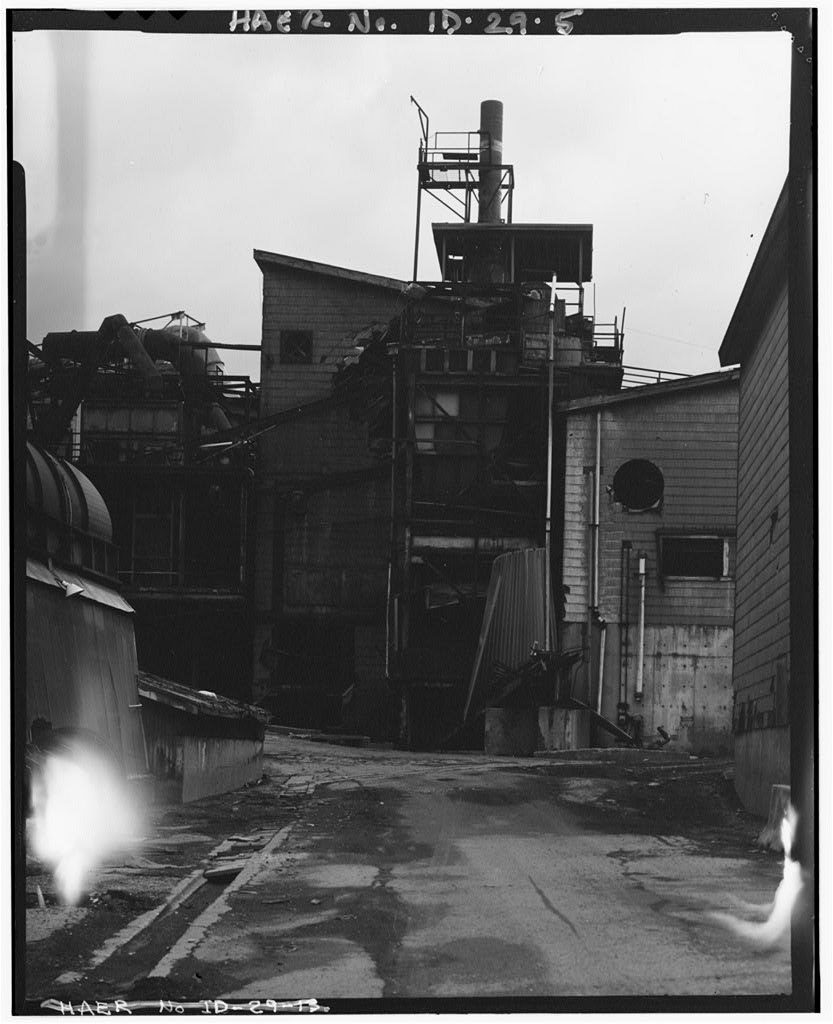
“Pelletizing plant section of ore preparation plant. View is from within smelter complex looking to the south.” Historic American Engineering Record · Library of Congress
Not found
The document itself has never surfaced.
The calculation is well attested. The vice president is not named in any
source reached for this film, and the sheet of paper has not been produced.
That is the single biggest open question in this story, and it is stated here
rather than smoothed over.
The places it would most likely be: the Superfund administrative record, the
discovery from the children's litigation of the 1980s, and the environmental-health
archives of the universities in the Northwest. If you have seen it, or you
know where it is, write. It would change this film.
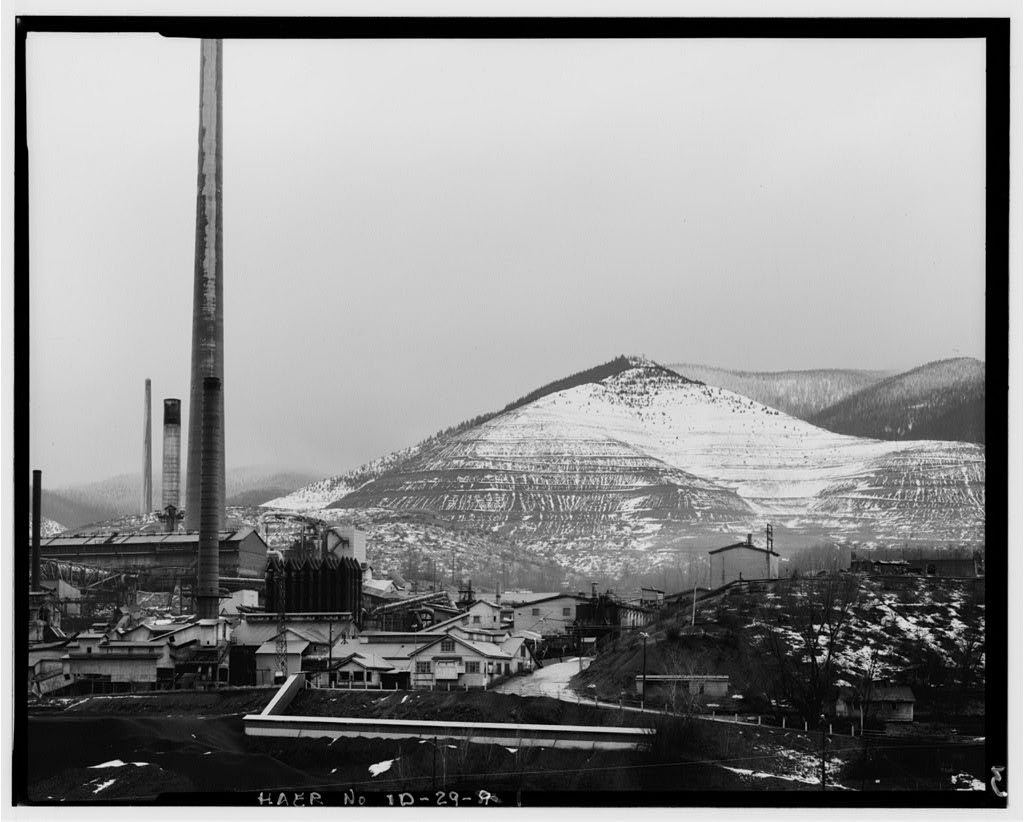
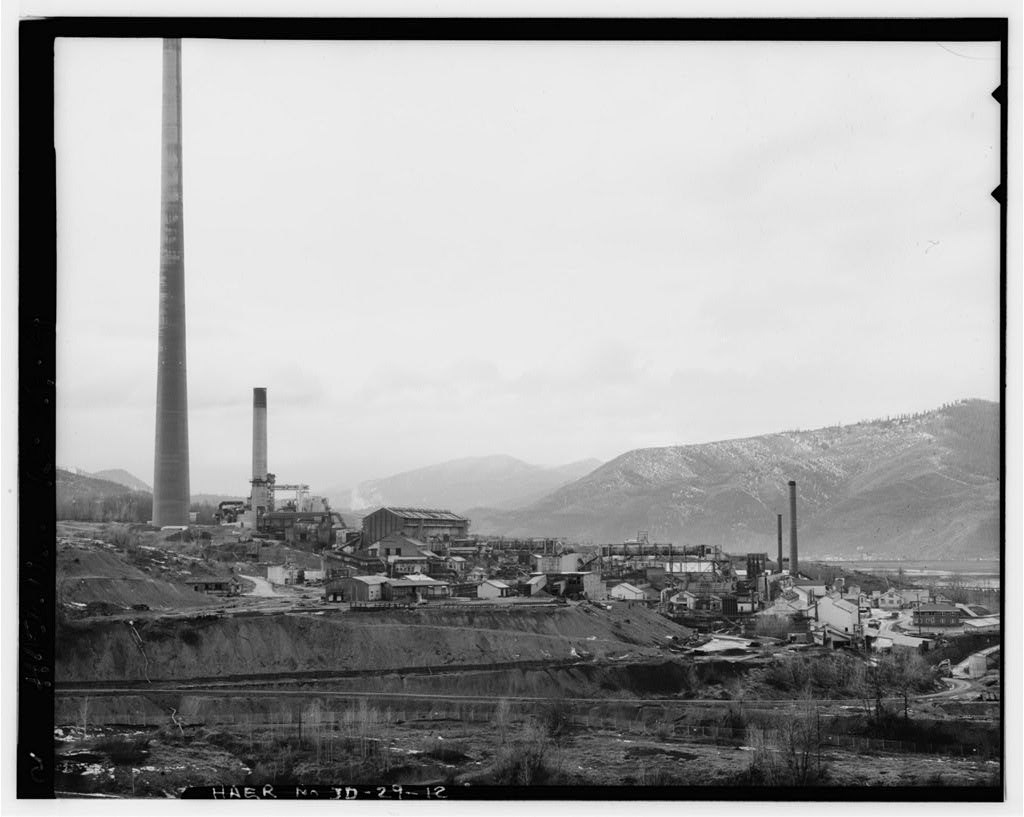
Bunker Hill Lead Smelter, view east from the ridge above Government Gulch. The federal survey lists what is in the background, left to right: “smelter office, refineries, slag fuming stacks, high velocity flue, bag house, 200-foot stack, and 715-foot stack.” The bag house is the building that burned on 3 September 1973. Historic American Engineering Record · Library of Congress
May 1996
Three people, watching the chimneys come down.
Four stacks were demolished,
the tallest 715 feet, for about seventy-five thousand dollars. Thirty thousand
spectators were expected. The press took down what people said.
Every day when people look at them, they are reminded of the waste and the
lead poisoning.
Cliff Marshall, businessman — in favour of the demolition
This is a mining town — period… They can't just bury the past and make it all
go away.
Alice Van Kleeck, 55 — against
When they go down, we'll all know Uncle Bunker is gone for good… We're a
mining town, and I think we always will be.
Donald Jasberg, 70, retired Bunker Hill worker
Corrections
What the record actually says.
Left: what is commonly
written about Kellogg. Right: what the document says — or does not.
A lost donkey found the silver.
That is folklore, not record. A jackass is
central to every telling, and the film tells it as what it is — the story the
town tells about itself. The documentary record is a claim filed on 10
September 1885 by Phillip O'Rourke, with Noah Kellogg as a witness.
Claim record, 10 September 1885
The smelter closed in 1982.
Sources give both. Press reporting says 1981, with
2,200 jobs; other accounts date the facility's closure to 1982. Until
that is settled, the honest form is the one that is true under either:
the closure came in 1981; by 1982 it was over.
Contemporary press reporting; secondary accounts
The stacks came down on 26 May 1996.
Press said 26 May at 2 p.m.; other sources say the 27th. The
film says "in May of 1996" and will keep saying that until a
primary source settles the day.
Contemporary press reporting
A specific number of men were held in the bullpen.
The figures vary by source, so the film gives
none. It says hundreds, and describes the practice: detention without charge
under martial law, then a permit system that required a man to renounce his
union to work.
Idaho state records; contemporary accounts
Those blood lead levels were "x times the safe limit."
The CDC's blood lead reference value has been
revised downward repeatedly, so a multiple calculated against
any one version of it dates badly and invites an argument about the wrong
thing. The film says today's reference value is a small fraction of these
numbers, and leaves the figures to do the work.
CDC blood lead reference value, revised
The Sunshine Mine fire was part of this.
The 1972 Sunshine Mine fire killed 91 men in
the same valley, one year before the baghouse burned — and it was a
different company. It belongs to the Silver Valley's history
and not to Bunker Hill's ledger, and conflating them is common.
Sunshine Mining Company records, 1972
The count
Five thousand and sixty-one, then two thousand three hundred and fourteen.
1910
1,278
1960
5,061 — the peak
1980
3,417
2000
2,395
2020
2,314
US Census, 1910–2020. The Superfund listing came in 1983; cleanup
began in 1986 and is expected to run for decades. The gondola for the ski resort
opened in 1990.
The archive
Where all of it came from.
Historic American Engineering Record · Library of Congress
Library of Congress · Prints & Photographs
U.S. Environmental Protection Agency
Idaho Department of Environmental Quality
Bunker Hill Superfund site records
U.S. Census, 1910–2020
Contemporary press reporting, 1892–1996
Idaho state records, 1899–1907
Farm Security Administration · Arthur Rothstein, 1936
Every frame in the film names its repository on screen. Connective and
atmospheric imagery is illustrated and labelled as such. No image of any
child is generated, in the film or on this page. The
Barnard–Stockbridge Collection at the University of Idaho is the great photographic
record of this valley and is not used here: its rights are unstated
and Nellie Stockbridge died in 1965, so parts of it may remain in copyright. The four
Harper's Weekly engravings of the 1892 Coeur d'Alene trouble (23 July 1892) are
public domain and held by the Library of Congress, but the largest file it serves is
640 pixels — too small to print, and so not used here either.
Method
How these films are made.
A short account of the rules, because they are the reason to trust
the films — and the reason they occasionally contradict the sources everyone else
uses.
Read the source, don't cite it
On the Nitro film, the production figure that nearly every account calls
unrecorded was printed on page 31 of a 1920 volume the film had already been
taking its photographs from. Looking at the pictures in a book is not reading it.
A repository is not a provenance
That same 1920 volume covers eight different plants. Its Nitro content is one
panorama and one page of text; the photographs in the same chapter are Kenvil,
New Jersey. "From the Nitro book" tells you nothing about what is in the frame.
Say which silence it is
"We looked and there was nothing" and "we never looked" are different findings,
and only one of them belongs in a film. Where a document exists but could not be
reached — a property map in a box at the National Archives, say — the film names
it as an open question.
Nothing is generated
No reconstruction, no dramatisation, no synthetic imagery. If a moment has no
photograph, the film says so rather than inventing one. Every frame names its
repository on screen, and where an image is of the right town but the wrong
company or the wrong decade, it carries a caption saying so for as long as it is
on screen.
The next town
Want to know which town is coming up?
One email when a new film goes live — which town it is, and the one
thing the records turned out to say that almost nobody has written down. When a
town's book is finished, subscribers hear first.
Your address is never rented, sold or shared with anyone.
Unsubscribe in one click.